Showing posts with label Colonialism. Show all posts

Sunday, 31 July 2016

‘Gaza in Context’ Film Takes Aim At Media Coverage of 2014 Gaza Attacks


ED Noor: Gaza in Context offers a comprehensive teaching guide. To study this film in depth with full script and educational content, please head over to this page. The screen capture above says so much about the uneven treatment given to the inhabitants of Palestine.


By Noura Erakat and Tareq Radi
Source

In the summer 2014, Israel launched its most devastating offensive on the besieged Gaza Strip to date. It sealed the perimeters, expanded the buffer zones, concentrated the already dense population, and launched six thousand airstrikes and fifty thousand artillery shells in an air and ground offensive that lasted for fifty-one days. 

The register of death and destruction was harrowing and included the killing of 2,251 Palestinians, including 551 children; the complete or severe destruction of eighteen thousand homes; the forcible displacement of one hundred thousand Palestinians, and untold trauma that has left more than three hundred thousand children in need of psycho-social treatment. 

Palestinian forces killed seventy-two Israelis, six of whom were civilians. As Palestinian doctors struggled to treat the injured in under-sourced hospitals vulnerable to attack, Israel’s military industry boomed. Three hundred employees of one company, Israel Military Industries, worked twenty-four hours shifts for four weeks, to ensure that the Israeli Army would have a sufficient arsenal. One company CEO explained, that

“After every campaign of the kind that is now taking place in Gaza, we see an increase in the number of customers from abroad…” because they can market their weapons as “battle-tested’.”

Indeed, Gaza’s captive population has become a laboratory for means and methods of warfare.

Israel used disproportionate fire power on a civilian population in Gaza, 2014 summer, committing every war crime in the book. From illegal weapons testing to human shields.

Despite the imbalance of military force, as well as the structural violence of siege, media narratives of victimhood and survival were exclusively reserved for Israel and Israelis. The harshest critique of Israel’s unparalleled use of force was that it was “too much” or “excessive” implicitly suggesting that the colonial relationship between Israel and its captive subjects is normal; the realm of abnormality was reserved for Palestinians who used crude weapons to challenge their condition. 

The de-historicization of the Gaza Strip and its severance from the rest of the question of Palestine functions as another site of violence, one that perpetuates colonial subjugation and all but ensures a repeat of the kinetic warfare necessary to maintain it. 

This pedagogical compendium, in combination with the short narrative documentary film Gaza in Context, uses Operation Protection Edge to demonstrate the temporal and spatial continuity of Israel’s settler-colonial policies across Israel and the Occupied Territories in order to disrupt the language of exceptionalism surrounding Gaza today. The volume scrutinizes Israeli settler-colonialism through a multi-disciplinary lens including history, law, development, political economy, and gender across Israel’s singular jurisdiction extending from the Mediterranean Sea to the Jordan River.

While the scope of Israeli force deployed during Operation Protective Edge is unprecedented, warfare is not. The summer 2014 offensive was the eighth attack on the coastal enclave since unilateral disengagement in 2005 and the twenty-second attack since the exchange of letters between Prime Minister Ariel Sharon and President George W. Bush in April 2004. 

In her contribution, originally published in The Nation, Noura Erakat surveys Israel’s aggressions towards Gaza and concludes that warfare is systemic, longstanding, and is an extension of Israel’s broader policy towards all Palestinians.

This policy is guided by two principles:
1. To obtain the maximum amount of Palestinian land with the minimum number of Palestinian people; and 

2. To concentrate a maximum number of Palestinians onto a minimum amount of land.
ED Noor: Gaza stat: 1.8 M Palestinians of which 1.4 are homeless

Through this analysis, Erakat resituates the question of the Gaza Strip within a framework of settler colonialism that helps put the rest of the pieces within this publication in conversation with one other.


ED Noor: In the immortal (and immoral) words of Ariel Sharon:
"We'll make a pastrami sandwich of them, ... we'll insert a strip of Jewish settlements in between the Palestinians, and then another strip of Jewish settlements right across the West Bank, so that in 25 years' time, neither the United Nations nor the United States, nobody, will be able to tear it apart." ~ Ariel Sharon


Illegal Israeli settlements in the Occupied West Bank

Joel Beinin scrutinizes examples of incitement made by Israel’s governing officials that exemplify the “public devaluation of Arab life,” to expose the normalization of anti-Arab and anti-Muslim sentiments in Israeli society. For example, Uri Elitzur, a pro-settlement journalist and former aide to Prime Minister Benyamin Netanyahu, argued that all Palestinians are enemy combatants and that rape should be used as a tool to deter Palestinian resistance. Beinin argues that this racism lays the foundation for domestic support of military operations and serves to shield the army from critiques of disproportionate uses of force.

ED Noor: Then there is this from Israeli Prime Minister Ariel Sharon:
I don’t know something called international Principles. I vow that I will burn every Palestinian child (that) will be born in this area. The Palestinian woman and child are more dangerous than the man because the Palestinian child’s existence infers that generations will go on, but the man causes limited danger. I vow that if I was just an Israeli civilian and I met a Palestinian I would burn him and I would make him suffer before killing him. With one hit I’ve killed 750 Palestinians (In Rafah in 1956).I wanted to encourage my soldiers by raping Arabic girls as the Palestinian woman is but a slave for Jews, and we do whatever we want to her and nobody tells us what we shall do but we tell others what they shall do.” ~ Ariel Sharon, 1956, interview with General Ouze Herham.

Israeli "authorities" often incite genocide in their Tel Aviv office. Palestine is Occupied by Zionist extremist "crazies." Occupied Jerusalem is NOT the "Jewish" capital. Even the American Government recognizes Palestine as "Occupied Jerusalem."

While Beinin scrutinizes the societal trends that have shielded Israel’s army from domestic critique and enabled its use of disproportionate force against Palestinians, Erakat’s article on Israel’s manipulation of the laws of war helps explain how such expanded force is legitimated in the language of law. She explains that Israel’s unprecedented use of force during Operation Protective Edge is a reflection of the new norms of war it has sought to establish since the second intifada in September 2000. She unpacks some of Israel’s most troubling claims including a radical understanding of force-protection, a forward looking analysis of proportionality, and a truncated definition of who is a Palestinian civilian. Erakat concludes that as a result of these changes in the law together with Israel’s longstanding policy towards Palestinians, Operation Protective Edge may not be the worst of what is to come.
 .
Oh the horrors! Over 500 children were needlessly slaughtered in Gaza, 2014 summer.

The four articles on development examine the use of development as a political tool to further subjugate, separate, and weaken Palestinian society. As Gaza’s economy reaches the highest stages of de-development yet, Sara Roy, Nuriya Oswald, and Max Ajl each scrutinize the international community’s futile policies adopted to “reconstruct” Gaza in the aftermath of OPE’s devastation.

Roy reaffirms that Israel’s attack on Gaza was not a response to Hamas rocket fire but, rather, continued its policy of incapacitating the coastal enclave. Roy highlights that not a single reconstruction plan has challenged the political status quo that produces vulnerability and deprivation. She argues that the current plans further entrench Israel’s blockade, and outsource the responsibility for its maintenance to the United Nations thus legitimizing Israel’s security narrative.

Despite the imbalance of military force, as well as the structural violence of siege, media narratives of victimhood and survival were exclusively reserved for Israel and Israelis.

The entire infrastructure of Gaza was targeted in the summer of 2014 by the Israeli    attack on the civilian population of Gaza. (ED Noor: Water collection then and now. A man collects water from a small container; behind him the former water system for his area lies in ruins.)

Similarly, Oswald dissects the United Nation’s Gaza Reconstruction Mechanism (GRM) to expose the economic benefits Israel may enjoy from the plan. She also tackles Israel’s stated security concern regarding the application of imported materials towards military related activities. She highlights that, due to the current conditions in Gaza, recipients of the materials are unable to cover the cost of labor required for construction and, as a result, proceed to sell the items on the black market. Oswald argues that the absence of a mechanism to track how the materials are used once delivered reveals that the function of Israel’s oversight is control, rather than security.

Taking a step back, Ajl provides a historical analysis of the increasing scale of attacks on Gaza since 2006. He uses this historical analysis to interrogate the notion of “collapse” and its ability to separate Israeli policies from a settler-colonial framework. 

Through a critical reading of the World Bank report Gaza Economy on the Verge of Collapse, Ajl argues that the “World Bank’s analysis sidesteps the colonial genealogy of the siege,” by attributing Israel’s policies of warfare and blockade to the state’s inability to reconcile with Hamas. In doing so, it elides the state’s deliberate attempts to de-develop, isolate, and control the Gaza Strip since 1993, well before Hamas’s electoral victory in 2006. 

The World Bank’s economic prescriptions reflect this limited analysis.

It recommends that lifting the siege and reforming the economy requires that the Palestinian Authority (PA) replaces Hamas as the governing body of Gaza.
Ajl highlights that
the World Bank’s emphasis to work with the PA
is colonial in nature,
because it only accepts and supports interlocutors
that the colonial power has deemed legitimate.
.
Gaza, 2014 summer, hundreds of thousands of Palestinians were displaced from their homes and took shelter in UNRWA schools, hospital yards and the street.


As Roy and Oswald point out, the GRM strengthens Israel’s mechanisms of control over Gaza by granting Israel the authority to regulate the material that can enter the territory but relieving it of any responsibility for the territory. Israel possesses a similar mechanism of control under the veneer of development in the West Bank. 

In her article, Lamya Hussain discusses the implications of the Israeli Civil Administration’s (ICA) 2008 decision to appoint itself as the governing body that authorizes or denies any plans submitted by or on behalf of Palestinians in Area C. 

Today, the ICA serves as a planning regime designed to obstruct Palestinian development initiatives in order to take their spatial place. Hussain details the ICA’s use of urban planning as a tool to facilitate housing demolitions, restrict mobility, annex resources, and shift local geographies.


Nur Arafeh’s examination of Israeli policies aimed at removing Palestinians from Jerusalem rebuts the explanatory framework of religious conflict. She argues that Palestinian resistance in the city should be viewed as a response to colonial policies, as opposed to religious differences, and that religion is being exploited to obfuscate Israeli political goals.

Furthermore, Arafeh criticizes the Palestinian Authority’s
lack of investment in Jerusalem
as a contributing factor to the Judaization of the city.

As Israeli development initiatives advance, leaderless Palestinians in Jerusalem are left to fend for themselves in the face of forced displacement and economic strangulation.
Tariq Dana’s contribution on the Palestinian Authority’s security coordination with Israel helps contextualize the formal leadership’s apathy towards Jerusalem. Dana identifies the major factors that transformed the Palestinian security sector into a proxy apparatus of Israel’s occupation regime. Upon Hamas’s legislative victory in 2007, Israel and its Western allies moved swiftly to support the PA in the West Bank and rework the doctrinal foundation of Palestinian security. 

Over the next three years and with President Mahmoud Abbas’s cooperation, the US State Department allocated ninety-nine million dollars to restructure the PA’s security infrastructure and an additional 392 million dollars to train and equip its security forces.

Together with other critical junctures,
today the raison d’etre
of Palestinian police forces
is their ability to meet Israel’s security concerns.

Mouin Rabbani uses the PA’s fidelity to Israeli and American plans to scrutinize the potential of an impending intifada. He explains that the interlocking nature of the Palestinian security forces and the Israeli occupation, together with the Palestinian leadership’s aversion to popular mobilization, makes resistance to Israel’s colonial authority highly improbable. 

Despite the increasing ferocity of Israel’s attacks, Rabbani notes that a third Palestinian mass uprising is unlikely because “rebellions are almost never instigated by reality alone.” He highlights that the first and second intifadas were not simply reactions to particular events; rather they emerged and continued as a result of a confluence of cumulative factors that spanned several years. Rabbani sheds light on why and how a colonized people can endure sustained structural violence and not respond with sustained collective resistance.
.
Nobody is spared Israeli brutality. American/Palestinian child, Tariq Abu Khedair

Nadera Shalhoub-Kevorkian, Sarah Ihmoud and Suhad Dahir-Nashif center sexual violence as a tool within the larger structure of colonial domination. The authors draw on Patrick Wolfe’s “logic of elimination,” the understanding that settler colonialism is a structure, and not a singular event, that seeks to destroy and replace indigenous populations, to unpack Israel’s racialized logic of sexual violence. 

In this framework, genocide is intricately connected to settler colonialism. They expand on the sexualized discourses of OPE to demonstrate the embedded nature of sexual violence within Israel’s eliminatory logic. Maya Mikdashi builds on this intersectional analysis of gender and settler colonialism by calling into question the lack of public mourning for Palestinian men killed during the large scale offensive.

ED Noor: At the time of this Palestinian holocaust, there was little mention of male casualties and deaths in the media, all male deaths apparently listed as Israeli combatants regardless of status. 

She takes a critical look at Western-based media’s emphasis on the killing of women and children and argues it “further normalizes and erases the structures and successes of Israeli settler colonialism.” Mikdashi asserts that the Palestinian people are one, regardless of their gender. They live together under settler colonial conditions and should not be separated in death not least because even the most advanced weapons technology does not distinguish them upon lethal contact.

The following contributions, combined with the previously published Gaza Revisited and the short narrative documentary film Gaza in Context, serve to rehabilitate the Gaza Strip within a settler-colonial framework. In doing so, it emphasizes the non-exceptional nature of violence endured by Palestinians in the Gaza Strip. 

The articles in both volumes provide in-depth and multi-disciplinary resources that disrupt the current production of knowledge surrounding the “conflict.” Operation Protective Edge, and any past or future Israeli onslaughts, should be read within this framework in order to highlight the abnormality of the Palestinian condition and to realize a viable and just alternative.

To read more and for a comprehensive teaching guide, please visit Gaza in Context website.

PLEASE NOTE:
Here is a refreshment of Israeli war crimes and crimes against humanity which took places extensively all throughout Palestine, but most horrifically in Gaza the summer of 2014.  

The interview is with Miko Peled and Abby Martin on RT’s, Breaking the Set. Miko Peled an Israeli born to “The General’s Son.” 
.

Monday, 17 October 2011

NEO-COLONIALISM, SUBVERSION IN AFRICA AND GLOBAL CONFLICT


Please enlarge thumb.

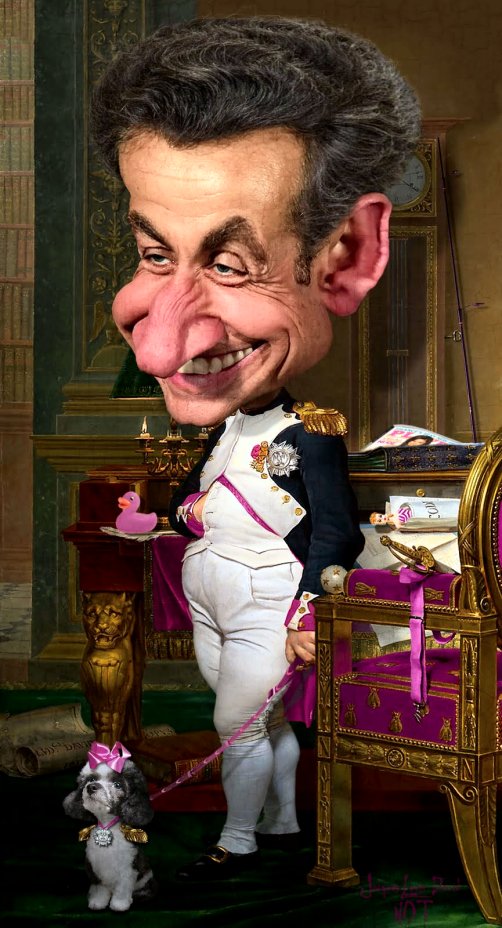
The following is another extremely insightful article on neo-colonial imperialist meddling in Africa by the unsual list of suspects. In this case, Zionist Sarkozy of France is discussed a bit more than the rest. (His portrait is quite beautiful, worth enlarging for amusing details).

Regrettably, the one thing that Dr. Lehmann omits, which is to be expected in most of the media, is the Israeli connection. So, as you read, keep this in mind ~ the meddling involvement of Israel is, as always when there are finances involved, irrefutable. Just the fact that banks are involved carries the stench of Rothschild.

Dr. Christof Lehmann.
October 17, 2011

The withdrawal of the old colonial powers from Africa, in the context of a developing cold war, (1), a developing Pan-African Nationalism (2), and the rising cost of maintaining a colonial administration system, during the nineteen-hundred and sixties left the African nations in a euphoric state of independence. 

In most cases this euphoria was soon to be substituted by chocking massacres and conflict, coup d’états unrest and destabilization. The old colonial rulers had returned with a vengeance. Over fifty years later, most African nations are, in spite of the richness of their resources and productivity of their population, still catastrophically under developed, impoverished, indebted, plagued by conflict, unrest and instability due to the return of the colonial powers influence. 

Those African nations who failed to comply with their returning rulers were and are mercilessly attacked. Libya and the Ivory Coast are examples for the new colonization’s subversive influence, and a warning for African leaders to face the lion in solidarity or be devoured one by one.

COMMON DENOMINATORS

All conflicts in post-colonial African wars as well as internal unrest have the same common elements:
The involvement of foreign nations;

The instrumentalization of local elements; 
And the goal to control resources, economy, and geopolitically as well as strategically significant locations. 

Western Media’s narrative of French, British, and US-American involvement in Africa is commonly manufacturing popular consent by eliciting a fabled advocacy for stability, human rights, and democracy for African countries; nothing could be farther from the truth. 

Stability, human rights and democracy are but the pretext for aggressive neo-colonial subversion, invasion, long-term military presence and control. 
This subversion and invasion has acquired an additional dimension after China began to invest massively on the African continent. While the traditional colonial powers and the USA maintained the traditional role of the supremacist usurper, China is, though resource, trade and profit oriented, taking an approach of joint ventures and contribution to the development of African Nations infrastructure (3).

After all, the Chino-African model of free market enterprise and joint venture cannot function if African nations don´t develop to such degree that they can import consumer goods that are manufactured in China. 

Thus, since China began vesting interests in Africa, the traditional colonial powers and the USA´s subversions and aggressions began being directed against primarily China, and secondarily Russia, which is recently re-discovering it´s strength as a global power, after a period of restructuring and re-consolidation after the collapse of the USSR (4).

The neo-colonial model of subversion is based on directing and co-opting local instruments, such as opposition parties, human rights organizations, an ongoing internal low intensity conflict, as well as expatriate communities, expatriates sponsored and with ties to i.e. the National Endowment for Democracy, and other Institutes, NGO´s and Organizations that are notorious for their involvement in subversions
(5)

These systems interface with both civilian and military intelligence services and special operations forces, in a logical, systematic approach that invariably has the same outcome; the subversion of the country, and the installation of a controlled, friendly, or proxy government. 

Precisely the same methodology is explained in an analysis of the subversion of Syria that began with the “Arab Spring” in 2011 (6)

A successful subversion without the co-conspiracy of local elements is neither viable nor desirable. A U.S. Training Manual for Unconventional Warfare is breaking such terms as feasibility for subversion down into operational details (7)

The co-opting of local opposition in African subversions has been an invariable part of neo-colonial strategy since day one of neo-colonialism, when the Congolese Government and Patrice Lumumba were overthrown by creating and aggravating internal tensions, and the financial, as well as covert military support of an armed insurgency with its basis in a local militia (8).
 
The function of any of these subversions is invariably the controlling of resources and wealth while keeping the African Nations impoverished and indebted, and since the beginning of the rapid development of China´s economy, the geopolitical as well as economical warfare on Russia and China.

MERCENARY ARMIES IN COLONIAL WARFARE AND AL QAEDA

Abdelhakim Belhadj LIFG

The use of local instruments in subversions has largely been based on either tribal or religious aspects. A prime example of this strategy is Angola. After the Socialist MPLA, backed by Cuba and the USSR came to power in Angola, the Western Block, read NATO countries, began building and supporting two alternative movements, the NFLA in Northern, and UNITA in Southern Angola. Both the NFLA and UNITA were based on the same charter, but were divided by tribal affiliation (9).

In the case of Afghanistan, the USA and NATO countries heavily supported what was then called “Mujahedeen”, and a CIA-run network of Arab mercenaries, which came to become known as Al-Qaeda (10)

The same network of mainly Arab and Afghan mercenaries was used by NATO in the war on Serbia, and the conquering of Kosovo (11), and the same network has been used against Libya by Western Intelligence Services for decades, and it is currently delivering the core of the so called “rebels” in Libya (12)

How NATO is using this “network” or Al Qaeda, depending on what function it is supposed to fulfill in a given operation, as respectively purported enemy or ally is elicited by a West Point Study (13), that shows that the same Al Qaeda Terrorist Network in Benghazi and Derna, Libya, the Libyan Islamic Fighting Group, delivered the greatest per capita contribution of foreign fighters against the USA in Iraq, while the same LIFG is now providing the core around which among other, CIA imported Afghan Fighters (14) are installed in the theater of operations in the occupation of Libya.

At the onset of what is generally termed “The Arab Spring” in Libya, US-President Barak Obama signed an order, designating CIA operatives to the eastern Libyan cities Derna and Benghazi, in preparation of the final stages of the covert, and the beginning stages of the overt subversion of the Libyan Government (15)

Publicly, Obama sent the CIA operatives to “analyze” the rebel forces. This analysis however, had been done in the West Point Study (ibid.) long before, and knowing about how intelligence operations are performed, was part of the step by step strategy for subversion, explained in the TC18-01 Unconventional Warfare manual (ibid.). 
The military leader of the Al Qaeda fraction Libyan Islamic Fighting group was re labeled “rebels” and not long time after into the Tripoli Military Counsel (16)

Meanwhile, the Corporate Western Media villainies and positioned Muammar Ghadafi and the Libyan Government as dictatorial villains, that indiscriminately bombed “peaceful protesters” while it´s Al Qaeda and Associated Army of Mercenaries, and the political proxies Mahmud Jibril, Jalil, and a cohort of “anonymous “politicians” of the Transitional National Counsel were made into the heroes of the Libyan Revolution. 

The manufacturing of consent by media is one invariable element of warfare. The manufacturing of a quasi legitimate new government is an invariable element of neo-colonial strategy, as it can be observed on the example of the manufacturing of the National Council of Syria, which is in NATO´s sights too (17)

The main obstacle for the advance of neo-colonialism on the African Continent has never been Al Qaeda, but Muammar Ghadafi, the Libyan Government, as well as Laurent Gbagbo of Ivory Coast, and Robert Mugabe of Zimbabwe.

DO AFRICANS REALLY KNOW WHAT A SUPREME COURT IS?

In Ivory Coast, the situation was not unlike the one in Libya. Ivory Coast held a Presidential Election, with an apparently very close outcome. 

In Western Corporate Media all we hear is that the Electoral Commission of Ivory Coast had declared Outara the winner of the elections. 

What Western Media failed to report was, that there had been wide spread election fraud, that the President of Ivory Coast and his party took the election results to the supreme court, and that the supreme court declared Laurent Gbagbo the winner of the election and thus Laurent Gbagbo to be the lawful President Elect of Ivory Coast.

What was reported, and emphatically reported, was that “security forces” clamp down on “peaceful protesters”, and then, that “Outara´s Army” is cornering Gbagbo “in his bunker”(18)

This news Coverage and manufacturing of Consent is only possible in populations that are inherently racist and traditional or neo-colonial powers (19).

The important question is where did Outara, who just claimed to have won the election, gotten an “Army” from. Unless a population is so used to condescending racism and colonialist thinking, one would immediately say, but the electoral commission is not the one to approve of election results, it´s the Supreme Court. 

Not so, if the audience is inherently racist and inherently thinking in a way typical for colonial powers; condescending towards the wild and uncivilized African (ibid.). To illustrate the point on a Western Example. 

When George Bush and Al Gore had the closest ever election held in the United States of America (20), who certified the election? 

The Supreme Court (21)
Even though many Americans felt utterly disenfranchised, the population respected the Supreme Court. Can you for one moment imagine that “Al Gore cornered Bush in his bunker, with Al Gore´s Army, neglecting the Supreme Court, because an Electoral Commission had pronounced him the winner ?
Where would Al Gore have gotten an Army from anyways? 

What happened in Ivory Coast was that France and the United States backed Outara at neglecting the Supreme Court and the Constitutional Counsel of Ivory Coast because the Supreme Court decided in favor of Laurent Gbagbo and not the Proxy President of Neo-Colonialism in Africa.


Laurent Gbagbo

Where did Outara get an Army from? Outara´s “Army” consisted of a collection of “rebel forces” or French backed insurgents from the Northern part of Ivory Coast, who had been convinced by the French DGSE (22) and old colonial power structures, inherent in among other French Freemasonry in Arica, to side with Outara, against Laurent Gbagbo (23)

Besides that, 2.500 French soldiers (24), plus U.N. Soldiers (25) were present, taking actively part in the ousting of Laurent Gbagbo, and the legitimate government of Ivory Coast. That is where Outara got “His Army” from. Insurgents, French and U.N. Troops were Outara´s Army. (26)
 
An army that murdered thousands of Ivory Coast´s citizens in the neo-colonial post-modern coup d’état. Justice on Laurent Gbagbo is then served at the United Nation´s ICC making the U.N., France and the USA the judge, the jury, and the executioner. (27)

SO “WHY” HAD FRANCE TO REMOVE GBAGBO FROM OFFICE?

The question that needs to be answered, before it is possible to discern why the events in Ivory Coast and Libya as they do is “why” did the USA and France want Laurent Gbagbo and Ghadafi removed from political office. 

The unrests, the engineering of dissent, the alliances with armed militia, politicians and oligarchs are nothing but “functions” and “instruments”. 

It is comparable with a script for a play in the world political theater; the script is written, the acts planned, long before the cast of actors is chosen. 

The discourse of political reporting, and the manufacturing of opinion discuss the cast, seldom the play writer, almost never the play writers motivation, and that is one of the most critical functions of media with respect to social engineering. 

It is absolutely necessary to have an understanding of this background to understand the subversions in Ivory Coast and Libya. After World War II the European Economies were scrambling to reconstitute. So was that of France, which devised long term plans for economical recovery in several phases. 

The traditional form of colonial control by military might and absolute political control had, in spite of the richness of African resources, become too costly, too cumbersome, and in the light of the depletion of military force due to two major conflicts, become impossible.
What is also noteworthy is, that the post-war period was is the period where the development of media and Public Relations significantly began substituting police and military force as instruments for social control (28).
Laurent Gbagbo had discussions with other visionary African leaders who not only knew that the new-colonization of Africa was keeping African nations impoverished and virtually enslaved, it´s citizens being the back bone of new colonial powers economy, but who had vision, courage, and integrity in resisting the usurpers of Europe, the USA, and globalized Corporate Influences. 

Most prominently, Robert Mugabe, President of Zimbabwe, and Muammar al-Ghadafi, honorary leader of the Libyan Revolution. 

One of the main reasons why Laurent Gbagbo had to be replaced by France, and replaced fast, was that Gbagbo was not only seriously working towards creating Ivory Coast’s own currency, that would be independent of France, but that he, like Robert Mugabe and Muammar Ghadafi, actively lobbied and encouraged other African nations in the CFA region to follow suit (29)

The main reason why France “never would allow this to happen” in one of its old colonies is, that the CFA is one of the main sources of income for the French economy. Not only does France control the value of the CFA, and thus how much it earns on trade with CFA nations, not only does France cooperate with the IMF on regular devaluations of the CFA (30), France is printing the money for and exerts absolute control over the eight African countries economy.

Moreover, the monetary policy of France in governing the eight nations’ economy is in fact operated by the French Treasury, without any reference to the central fiscal authorities of any of these eight nations. Under the terms of the CFA Agreement, it is France that is unilaterally setting up these African nations Central Banks, and each of the eight countries is obliged to keep at least 65 % of its foreign exchange reserves in an “operations account” held at the French Treasury, as well as another 20% to cover financial liabilities (31)

In other words, 85 % of all foreign exchange reserves of Ivory Coast, Benin, Burkina Faso, Guinea Bisau, Mali, Niger, Senegal and Togo are 100 % under control of the French Treasury with France in a position to devalue and manipulate these countries economy to its own advantage. 

The CFA was created to keep African nations impoverished, to maintain the plunder of their resources and wealth, while feeding the French and European Economy (32)

The social unrest that follows in the wake of new devaluations (33), is then hard handedly oppressed by those “African Viceroys” that are nepotistic enough to co-operate with France as agents of their own nations’ and peoples’ enslavement.

Laurent Gbagbo opposed the colonial master because Laurent Gbagbo was working for the benefit of his people and Ivory Coast; that is why Laurent Gbagbo had to be removed.

SO WHY DID THE SUN KINGS OF EUROPE 
AND THE USA HATE GHADAFI?

Colonialism in Africa has changed significantly since the USA entered African Politics after WWII, and very significantly, with the consolidation of the European Union. While France has particular national interests in the CFA region, most of Southern Europe’s states are working towards an expansion of the European Market to the Mediterranean Basin, and a new colonization by means of economic control and military presence in Northern Africa. 

Seldom mentioned in the corporate media, the Royal Family of Morocco is a stern supporter of this policy. Cooperation on multiple areas, such as the control of the Mediterranean Basin States Social Economy (34) has been implemented for yea
French President Nicolas Sarkozy made it his personal ambition to achieve what even Napoleon did not, a colonization of the entire Northern and Western African Continent. In 2008 France and the European Union had been so far in their preparations, that the only remaining obstacle for its North African Colonial Ambitions was Libya, and Libya outright rejected to play into the hands of the want to be colonialists.
When asked for his opinion about the Mediterranean Basin alliance, Muammar Ghadafi said:
If Europe wants co-operation, it should go through Cairo and Adis Abeba”. (35)
In 2008, President Sarkozy wanted to make the Mediterranean Alliance his contribution to the European Union, and during the six months of the French E.U. Presidency (ibid.) French Foreign Minister Bernard Kouchner did not only convey Sarkozy´s “disappointment”, but clearly indicated that Libya and Ghadafi had become “the” obstacle for further colonial expansion in Northern Africa, when he stated that
Colonel Ghadafi is not in agreement with this vision. Neither was he in agreement with the Barcelona process which we intend to support and pursue” (ibid.).

The reason why Libya opposed the Mediterranean Alliance was that it would have split, rather than united African Nations. Rather than establishing one more “zone” like the CFA Region in Northern Africa, Ghadafi and Libya were lobbying the African Union to abandon the CFA treaties with France, and to establish a Pan-African, gold backed currency, which would end the usury, the robbery of African nations resources, and the enslavement of an entire continent’s population.

The Libyan arguments were persuasive. Libya had the highest per capita GDP, the highest standard of living, social services, wages, job security, education program, literacy rate, and countless other “firsts” among African Nations.
After Ghadafi´s and Libya´s outright rejection of the Mediterranean Alliance (ibid.) and success at lobbying for a Pan-African currency with ,among others, Laurent Gbagbo from Ivory Coast meant, that the USA and Europe had only one option left, to topple the Libyan Government by any means necessary.
THE MYTH OF AN AFRICAN UNION

To understand the full range of the problem Libya created, it is necessary to know what the African Union (AU) is. The African Union was established in 2002 by member states of the former Organization of African Unity (OAU). The OAU was established in 1963 with the function to facilitate African Nations’ transition to independence, to counter all forms of colonialism, and protect the independence and national integrity of African Nations (36)

The transition from the OAU to the African Union in 2002 was nothing else but the European Union´s co-opting the only forum that actively lobbied against neo-colonialism, and substitute it with an African Union, that is modeled over the European Union (37).
The African Union is but the new colonial administration of a now united Europe.
With approximately one third of the entire budget of the African Union paid for by the European Union, as alms to Africa, taken from the money that is usurped from Africa, the African Union is but the European Union´s Colonial Administration. 

An African Court of Justice (38) modeled over the ICC, an African Investment Bank, an African Development Bank, and an African Central Bank, managed by Europe, for Europe and the USA (39), and global Finance Capital (40)

The African Union did not “cower in the light of pressure from the E.U(41) as some interpreted its support of UNSC Resolution 1973 (42), the African Union strictly spoken functioned exactly as it was designed to do; as an instrument for the new colonization of Africa. 

Just like Laurent Gbagbo, who had to be removed because he wanted Ivory Coast to have its own currency or a Pan-African Currency under African Control rather than that of the French National Bank, Muammar Ghadafi had to be removed, because he was the one obstacle that prevented the establishment of the Mediterranean Alliance, and because his ideas about a Pan-African Gold Dinar was seriously considered by many African leaders, who do not dare to speak of it over their breath.
`THAT IS “WHY” GHADAFI HAD TO BE REMOVED.
THE SPIRAL TOWARDS A GLOBAL CONFLICT

Ivory Coast and the removal of incumbent President Laurent Gbagbo from office;

the criminal war against Libya and the ousting of the legitimate Libyan Government,

the aggressive expansion of the US African Command,

the ongoing subversion of Syria,

the manufacturing of war in Afghanistan, Pakistan, Iraq, Yugoslavia, Somalia, Sudan, Ossetia;

the manufacturing of insurgencies in Chechnya, Yemen, among others,

and countless Color Revolutions

and the Arab Spring Coup d’état have only been possible for two reasons.
The fact that Russia was severely destabilized after the collapse of the USSR, and under the Presidency of Boris Yeltsin, who strip sold Russian Assets to Global Oligarchs, and which had to find its footing as a global power. 

The fact that the transformation of the Chinese economy was prioritized higher by China than the defense of the nations in Africa that provide much of the resources that drive the Chinese economy.
Already at the International Security Conference in Munich, 2007, then President of The Russian Federation, Vladimir Putin used the strongest possible words of diplomatic parleur to warn the United States of America, saying that it´s aggressive expansionism has brought the world closer to a third world war than it has ever been before (43)

After the absolutely criminal and shameless abuse of the United Nations Security Council Resolution 1973 and the attempt by NATO countries to abuse the UN for a similar resolution on Syria, both China and Russia responded with a veto (44)

The global danger however, is not the fact of the veto, but the fact that the world today, with a United Nations that has utterly been co-opted by NATO countries (45), has no forum for a peaceful resolution of what increasingly seems to develop into a global war.

This is indeed an unprecedented crisis that demands unprecedented leadership, courage, and integrity.

REFERENCES:

 
2.    Pan-African Nationalism 

3.     The Guardian, China said the Booming Trade with Africa is Transforming the Continent.
http://www.guardian.co.uk/world/2010/dec/23/china-africa-trade-record-transform

4.     NATO`s War on Libya is Directed Against China
http://nsnbc.wordpress.com/2011/09/26/natos-war-on-libya-is-directed-against-china/

5.  Washington is conquering Africa, using France, Human Rights, Terrorism, and The National Endowment for Democracy.
http://nsnbc.wordpress.com/2011/10/02/washington-is-conquering-africa-using-france-human-rights-terrorism-and-the-national-endowment-for-democracy/

6.   The National Council of Syria and U.S. Unconventional Warfare. http://nsnbc.wordpress.com/2011/10/06/the-national-counsel-of-syria-and-u-s-unconventional-warfare/

7.     TC 18-01 Special Forces and Unconventional Warfare.
http://info.publicintelligence.net/USArmy-UW.pdf

8.     New Data on Murder of Lumumba.
http://www.africawithin.com/lumumba/murder_of_lumumba.htm

9.     Frontline Vol. 2. Issue 8. December 2008, How Africa Won Freedom.


11. German Intelligence and CIA supported Al Qaeda Terrorists in Yugoslavia. http://www.globalresearch.ca/articles/BEH502A.html

12.   Abdelhakim Belhadj, The Mask behind the Many Men.
http://nsnbc.wordpress.com/2011/09/25/abdelhakim-belhadj-the-mask-behind-the-many-men/

13. Al Qa´ida´s Foreign Fighters in Iraq. Combating Terrorism center at West Point. http://tarpley.net/docs/CTCForeignFighter.19.Dec07.pdf


15.   U.S. Sends CIA agents into Libya to analyze rebel forces. 

16.   Abdelhakim Belhadj, The Mask Behind the Many Men.
http://nsnbc.wordpress.com/2011/09/25/abdelhakim-belhadj-the-mask-behind-the-many-men/

17.   The National Council of Syria and US Unconventional Warfare.
http://nsnbc.wordpress.com/2011/10/06/the-national-counsel-of-syria-and-u-s-unconventional-warfare/


20.  Gore won election by 538.948 votes; Bush won the count by 300.
http://www.leinsdorf.com/Gore%20Wins%20the%20Election%20by%20538.htm

21.   Supreme Court of the United States; George W. Bush, et al., Petitioners v. Albert Gore, Jr., et al. http://www.law.cornell.edu/supct/html/00-949.ZPC.html


24.  Ivory Coast´s Gbagbo held after French troops move in. 

25.  Ivory Coast´s Gbagbo Captured at Presidential Compound. 


28.  History is a Weapon, Propaganda, E. Bernaise.
http://www.historyisaweapon.com/defcon1/bernprop.html

29. Laurent Gbagbo wants Ivory Coast to leave CFA and create Ivorian Currency. http://www.africanews.com/site/I_Coast_contemplate_new_currency/list_messages/36877

30.  IMF, France and Devaluation of CFA.
http://www.imf.org/external/pubs/ft/fabric/backgrnd.htm

31.   French Treasure controls 8 African Nations Central Bank
http://saoti.over-blog.com/article-17347736.html

32.  CFA Created To Keep African States Poor.
http://www.panafricanvisions.com/old/9/development.htm


34.  The Euro-Mediterranean Network of Social Economy.
http://www.ces.es/TRESMED/docum/esmed_en.pdf .


39.  Financial Institutions of the A-U. .
http://www.au.int/en/organs/fi

40.  GIGA EU-African Economic Relations. 

41. The African Unions Mistake of Policy and Principle.  


43.  ISC Munich 2007 – Putin, Full Text of Speech.
http://www.securityconference.de/Putin-s-speech.381+M52087573ab0.0.html